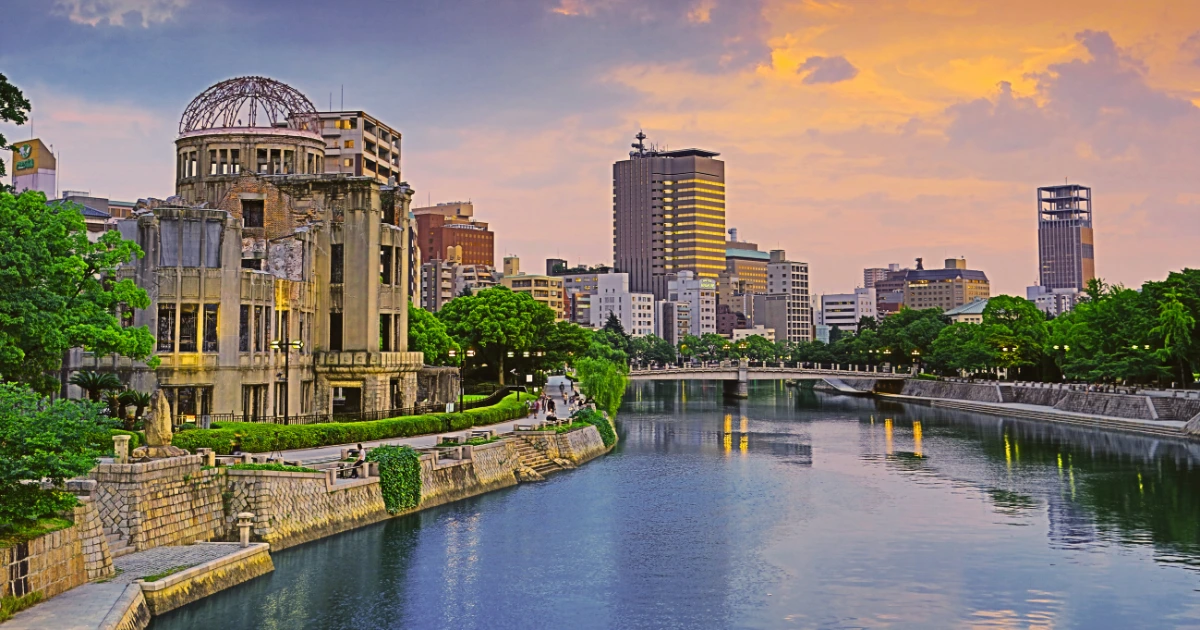
“LOVE & PEACE.” Hiroshima—the city that embodies these words more than any other in the world. The venue for this race was Hiroshima Gate Park, situated right across from the iconic Atomic Bomb Dome in the heart of the city.
The starting gun fires from the middle of an urban center adjacent to a soccer stadium, and runners dash along the riverside. What’s astonishing is the sheer proximity of this “urban-adjacent trail”—continue running from Hiroshima’s city center and before long, you plunge into breathtaking, rugged ridgelines. After hurtling down steep descents from the summit, you’re greeted by the everyday urban infrastructure of convenience stores, drugstores, and schools. An antithesis to traditional races that venture deep into remote mountains, a new narrative where city and nature intersect at zero distance was born here in Hiroshima.
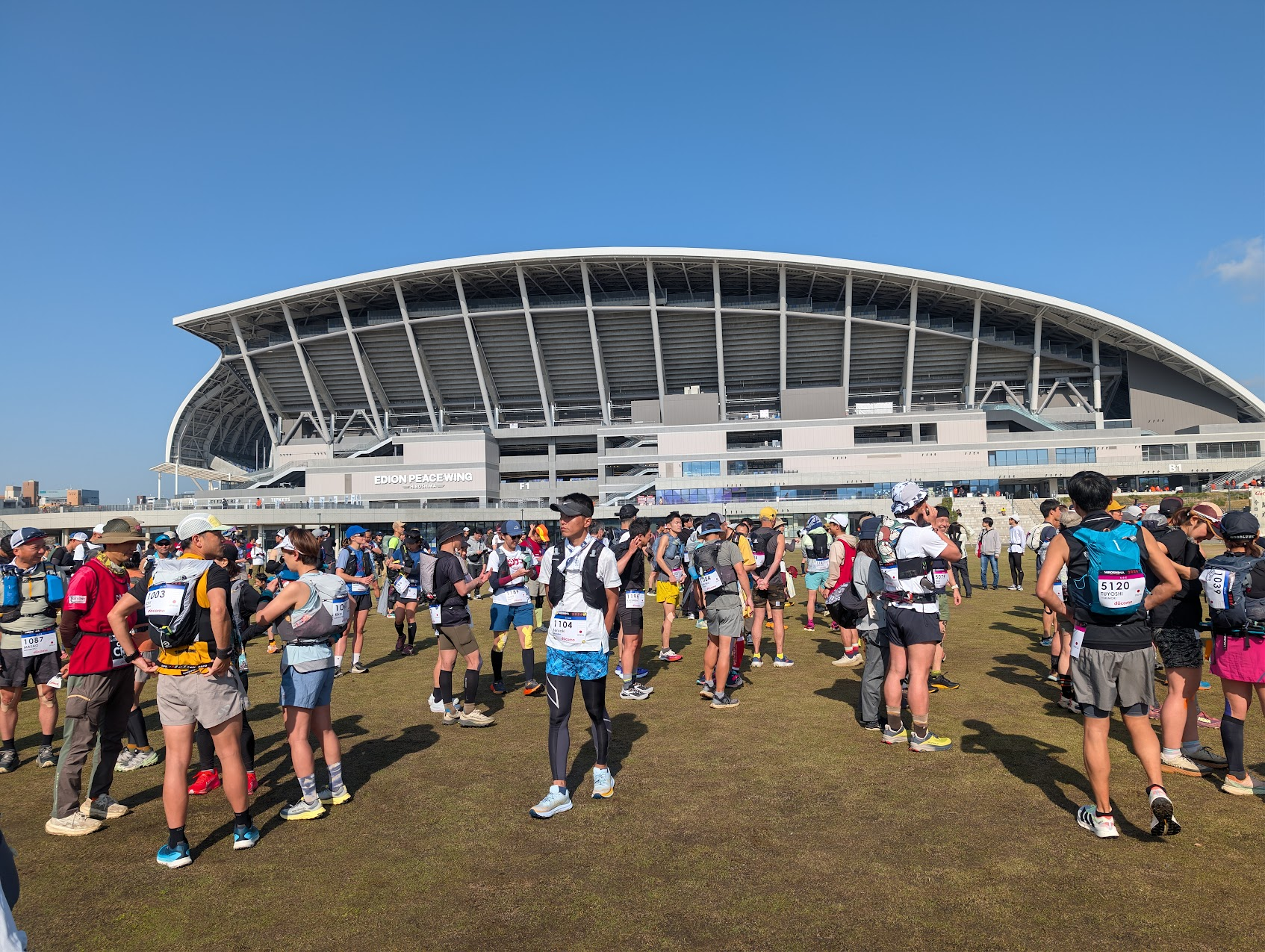
The Urban-Adjacent Trail Revolution: Walking Distance from the Shinkansen
From the perspective of someone with over 16 years of trail running experience and more than 10 years of international racing, what makes this event a game-changer for Japan’s trail scene is its extraordinary accessibility.
- Leveraging urban infrastructure: The venue is just a short public transit ride from a Shinkansen “Nozomi” stop. From Osaka, it’s only a 90-minute journey.
- Accommodation and backup: Within walking distance of the start/finish, you’ll find everything from the upscale Regal Royal Hotel Hiroshima to business hotels like APA Hotel, and casual hostels and dormitories. Furthermore, with plenty of outdoor gear shops nearby, any forgotten equipment can be quickly replaced.
Japanese organizers tend to fall into a “deep mountain supremacy” mindset, prioritizing trail percentage at the expense of access and accommodation capacity. While this event does include roughly 7 km of road running (riverside paths) before hitting the trail, this is a “necessary trade-off” to enjoy the benefits of urban convenience. This model, which fully leverages the infrastructure of a city of one million, represents a major revolution in opening up the sport to more people.
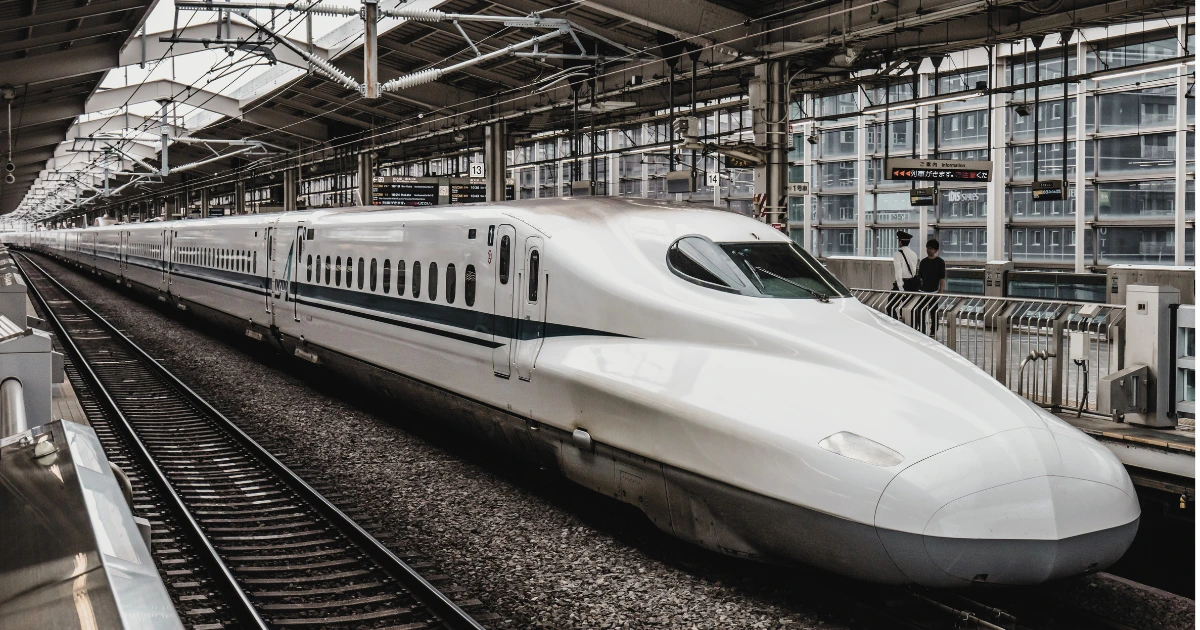
While running along the riverside course, the sight of a Shinkansen bullet train crossing overhead is something I believe is unparalleled anywhere in the world.
Aid Station Shortcomings and Safety Management: Major Barriers to Becoming International
On the other hand, if the event is serious about going international in 2027, the quality of aid stations needs serious attention.

- Insufficient energy and lack of variety: The onigiri (rice balls) provided were about two-thirds the size of a convenience store version, with a “one per person” limit. For the grueling 100 km and 50 km courses, the calorie provision was clearly inadequate.
- Dietary diversity and allergy considerations: While bananas were available, there was a lack of alternatives for runners with banana allergies, revealing gaps in risk management.
- Underutilizing Hiroshima’s culinary assets: Hiroshima-style okonomiyaki, momiji manju (maple leaf-shaped cakes), and lemon cakes—none of these world-famous local delicacies made an appearance. A missed opportunity that diminished the event’s appeal.
- Adopting international standards: In Asian races across Taiwan, Hong Kong, and China, hot cup noodles and congee are standard. These items simultaneously replenish energy, hydration, and sodium—essential elements for internationalization.
The organizers had indicated that aid stations would “provide a certain quantity,” so I personally decided to carry 800 kcal of reserve food—which proved to be the right call.
However, compared to races in other countries, the inadequacy of the aid stations is a significant issue. At a minimum, the selection should expand beyond rice balls to include bread, potato chips, chocolate, and similar items.
700 Runners Against a 2,000-Person Target
Against an initial capacity of 2,000, only about 700 runners actually started. Behind this significant shortfall lies a serious decline in brand power.
The event was formerly known as the “Hiroshima Bayshore Trail Run” and enjoyed strong recognition. However, conflicts with the previous management company and trail management organization, along with trademark disputes, forced a transition to new management and a name change to “HIROSHIMA TRAIL 2026.” Additionally, the absence of the “star producer” who had driven the event undeniably lowered runner expectations.
Looking at the category breakdown, over 300 runners concentrated in the 20 km course, indicating that the event currently relies on beginners and casual participants. Ironically, the low participation numbers meant that operational issues like volunteer shortages surfaced but didn’t cause a complete breakdown—a silver lining of sorts.
Regarding volunteers, while the on-site staff demonstrated strong professionalism, their numbers felt insufficient for an event targeting 2,000 participants.
The challenge of securing volunteers isn’t unique to this event—it’s an industry-wide issue in Japanese trail running. However, in a major city like Hiroshima, it should be easier than in rural areas to secure support not only from trail running and mountaineering volunteers but also from corporate sponsors and student communities. Support from other regions (Kansai, Kyushu, Shikoku, etc.) would also be beneficial.
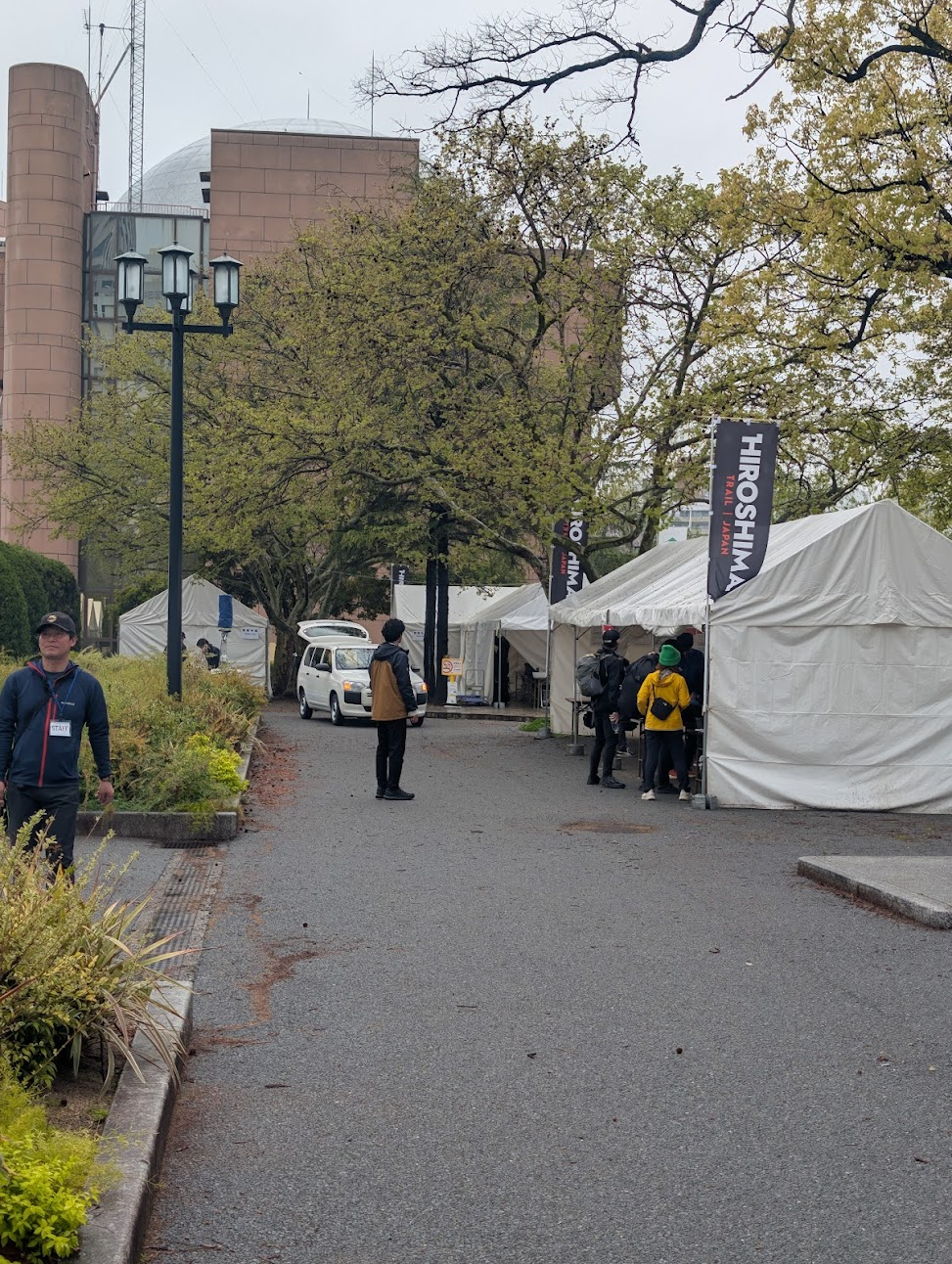
Perhaps due to the low turnout, the main venue lacked energy and excitement. The absence of sponsor and local business booths was particularly disappointing (only Amino Vital had a small tent). For internationalization, creating a sense of excitement at the race venue is essential.
Ambiguous Mandatory Gear and “Hidden Toilets”: Professionalism Challenges for the Organization
The disqualification of dozens of runners in the 100 km category due to gear checks exposed a lack of communication skills and professionalism in the organization.
The source of confusion was the vague definition of a mandatory item: a cold-weather long-sleeve shirt (cotton or thin undergarments not permitted). The boundary between thin materials like Uniqlo’s Heattech and proper fleece or thick thermal layers was never clarified.
On race day, a gear check was conducted at Yanase Campground (75.9 km point), where more than 20 runners were found to have brought soft shells instead of cold-weather long-sleeve shirts. As a result, many runners were forced into disqualification (DSQ).
On social media, this incident sparked heated debate, with opinions divided: “The organizers should have clearly defined the criteria,” “This should have been checked at the pre-race gear inspection the day before,” and “In the first place, the fact that trail runners interpreted soft shells as acceptable shows a dangerous underestimation of nighttime mountain conditions.”
The author felt this description was ambiguous and inquired about the details in advance. However, the organizers’ response was simply “please judge for yourselves.” Refusing to provide standards for rules that form the foundation of safety management goes beyond unhelpful—it actively breeds anxiety.
From an international perspective, Switzerland’s Eiger Ultra Trail specifies a numerical standard of “180g or more in size M,” while Australian events explicitly state “hydrophobic materials (merino wool, PVC, etc.); Lycra not permitted.”
By clearly documenting detailed requirements for mandatory gear as international races do, runners’ safety can be better ensured, and gear checkers can conduct inspections from a fair and consistent perspective, free from subjective judgment.
Even more surprisingly, the organizers took the stance of “not disclosing toilet locations in advance to ensure fairness.” Understanding the sanitary facilities available is directly connected to runners’ health management. This kind of “information concealment” reflects an immaturity that prioritizes administrative logic over participant safety and needs immediate improvement.
(Note: A correction regarding the toilet issue was issued later, but the pre-race communication with the organizers was very disappointing.)
Reference Links
2027: Can Hiroshima Become “HIROSHIMA” to the World?
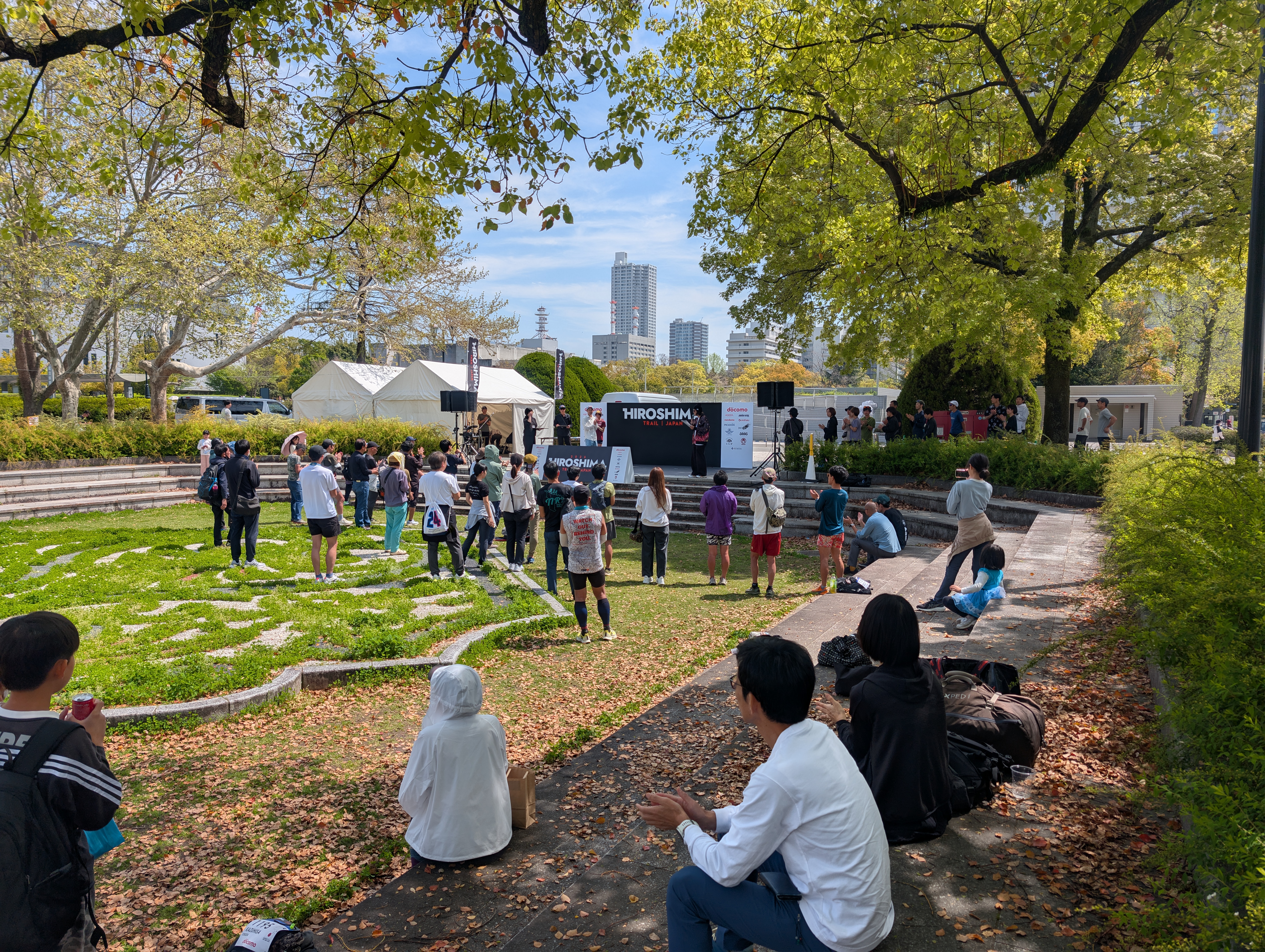
That said, the potential for growth is enormous. Cities like Dalian in China with “Dalian 100” and Seoul in South Korea with “SEOUL 100” have demonstrated that urban-based trail events can succeed. If Hiroshima can harness this potential, it could become a flagship race in Asia.
What the organizers should do now is visit international events. In particular, China’s “Dalian 100,” scheduled for next month, features a course layout strikingly similar to Hiroshima’s—starting from the city center and entering the mountains behind Dalian—offering many lessons in volunteer enthusiasm and aid station menus.
Events like Taiwan’s “Formosa Trail” and “XTrail Kenting by UTMB” also offer inspiration on how to captivate runners’ hearts. Learning from the failures of last year’s “Kaga Spa Trail,” I hope to see Hiroshima demonstrate the pride befitting a race that represents Japan.
Conclusion: Urban Trail Running as Japan’s New Frontier
“HIROSHIMA TRAIL”—where Hiroshima’s nature, culture, history, and people’s aspirations converge. This extraordinary experience of ascending rugged ridgelines just moments from the urban bustle suggests that Japanese trail running can become something more “free” and “accessible.”
This Hiroshima model can be applied to other cities. Japan is characterized by the proximity between cities and mountains, threaded together by the Shinkansen network. The fusion of Japan’s exceptional urban infrastructure with trail running could become a template for future trail running events across the country.
Kobe and Kyoto, in particular, are brimming with potential. If Kobe were to use Harborland as its main venue, a “sea to mountains” race concept would be entirely feasible. Kobe has even greater potential than Hiroshima—the metropolis of Osaka is right next door, and with Kobe Airport achieving international status last year, access from neighboring Asian countries has improved significantly.
The mountain of challenges I’ve presented regarding HIROSHIMA TRAIL are, viewed from another angle, room for evolution. To make “Hiroshima’s new legend” a reality, I hope the organizers will establish a professional management system worthy of their urban infrastructure.
Whether Hiroshima’s challenge becomes “the real deal” likely hinges on the official announcement expected in late summer to autumn 2026. As a fellow runner, I sincerely hope this “ripple” will spread and change Japan’s trail running scene for the better.