A Stage of Revival Where Hope and Anxiety Intertwined
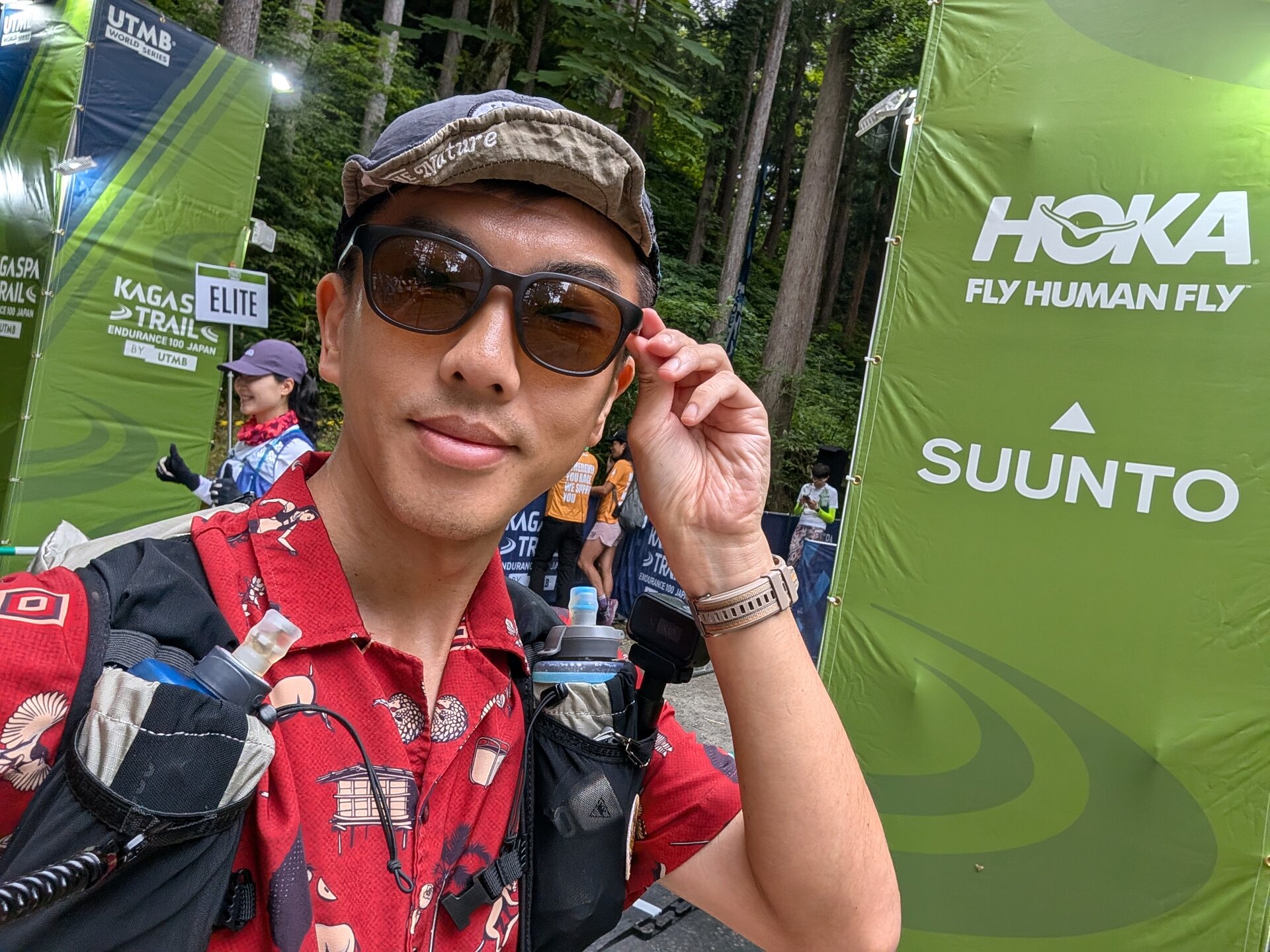
In 2025, the “Kaga Spa Trail Endurance 100 by UTMB” made its debut as Japan’s first UTMB World Series event—and it faced a trial by fire. Record-breaking heat reaching 37°C, critical shortages of water and food at aid stations, and severe delays in transporting runners who had dropped out. At the time, among trail runners at home and abroad, the race was spoken of less in terms of anticipation and more in the context of “organizational chaos”—a classic case of a race that had gone viral for all the wrong reasons.
“Will it really be okay this year?”—Amid such anxious and skeptical gazes, the 2026 edition drew a total of 2,500 runners, including roughly 800 international participants from 42 countries. What unfolded was a “reborn” race that had thoroughly examined its past shortcomings and undergone a striking transformation into an operation worthy of an international brand.
Seamless Logistics
From the perspective of someone who has participated in trail running races abroad—primarily across Asia—for many years, the key was eliminating “friction” in the runner’s journey.
This year, registration was moved from last year’s Yamanaka Onsen to the area in front of Kaga Onsen Station. The Kaga Onsen region is spread across four hot spring areas—Yamanaka Onsen, Yamashiro Onsen, Katayamazu Onsen, and Awazu Onsen—with accommodations concentrated in these areas (there are no hotels or lodging facilities around Kaga Onsen Station itself).
However, Kaga Onsen Station serves as the gateway to all of them, and placing race registration and booths here made the transition from check-in to accommodation remarkably smooth.
Registration itself was also highly seamless. Present your QR code and ID, and you could immediately collect your athlete bib, race swag, and more—a smooth experience that took just one to two minutes.
The Evolution of Hospitality: Aid Stations with Quality, Quantity, and Consideration
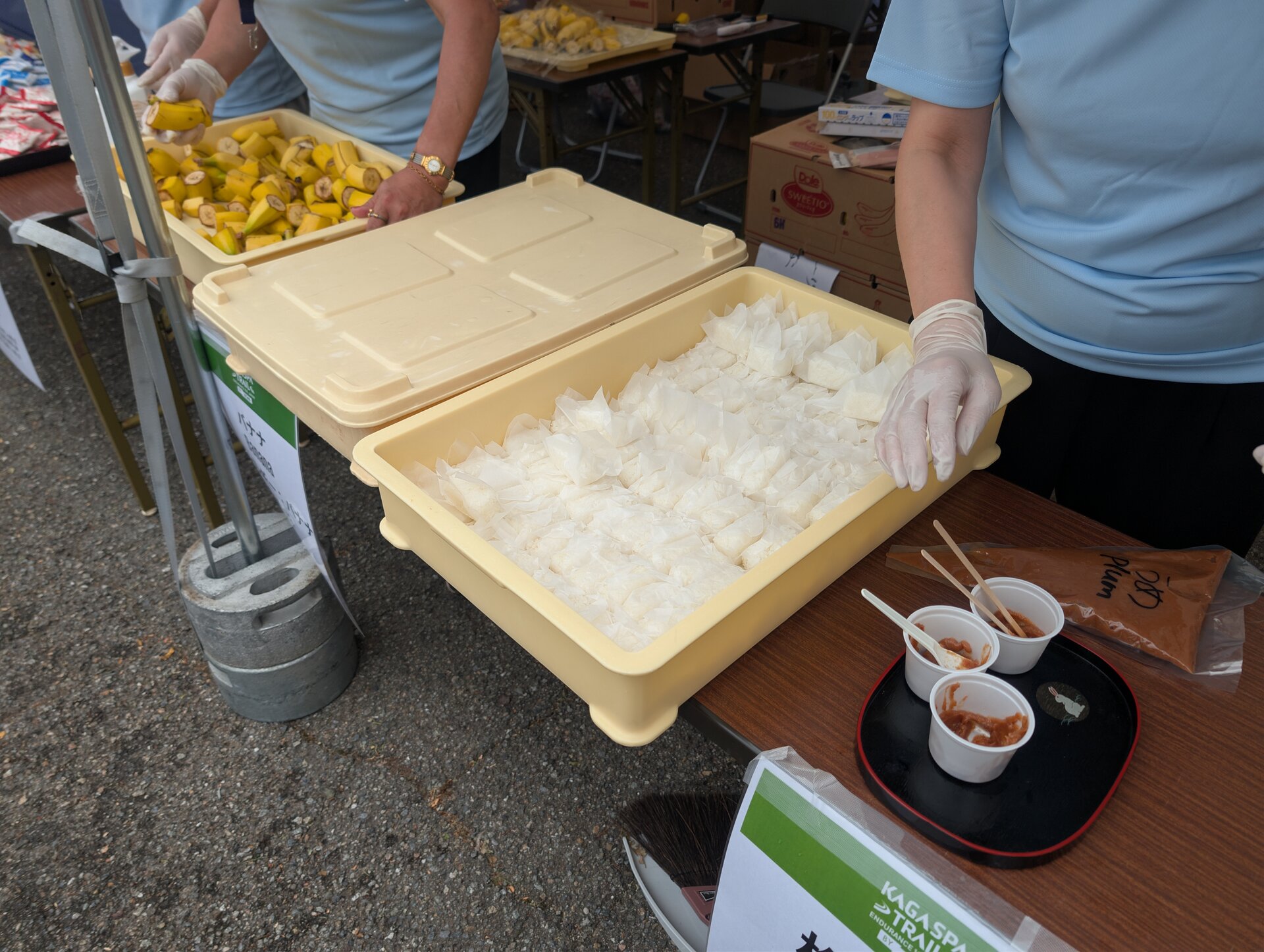
The aid stations—the biggest concern from last year—were raised to what can be called a “global standard,” drawing lessons from past failures. Race director Jiro Takigawa reflected on last year’s experience and expressed his resolve:
“We take this experience seriously and will further strengthen our operational structure next year, striving to improve. We will do everything in our power to deliver a race that truly satisfies all participants, supporters, and local residents.”
True to those words, the 2026 aid stations were stocked with supplies that seemed to say “no limits.” For drinks, in addition to water, cola, and sports drinks, runners were offered warm miso soup, coffee, and tea.
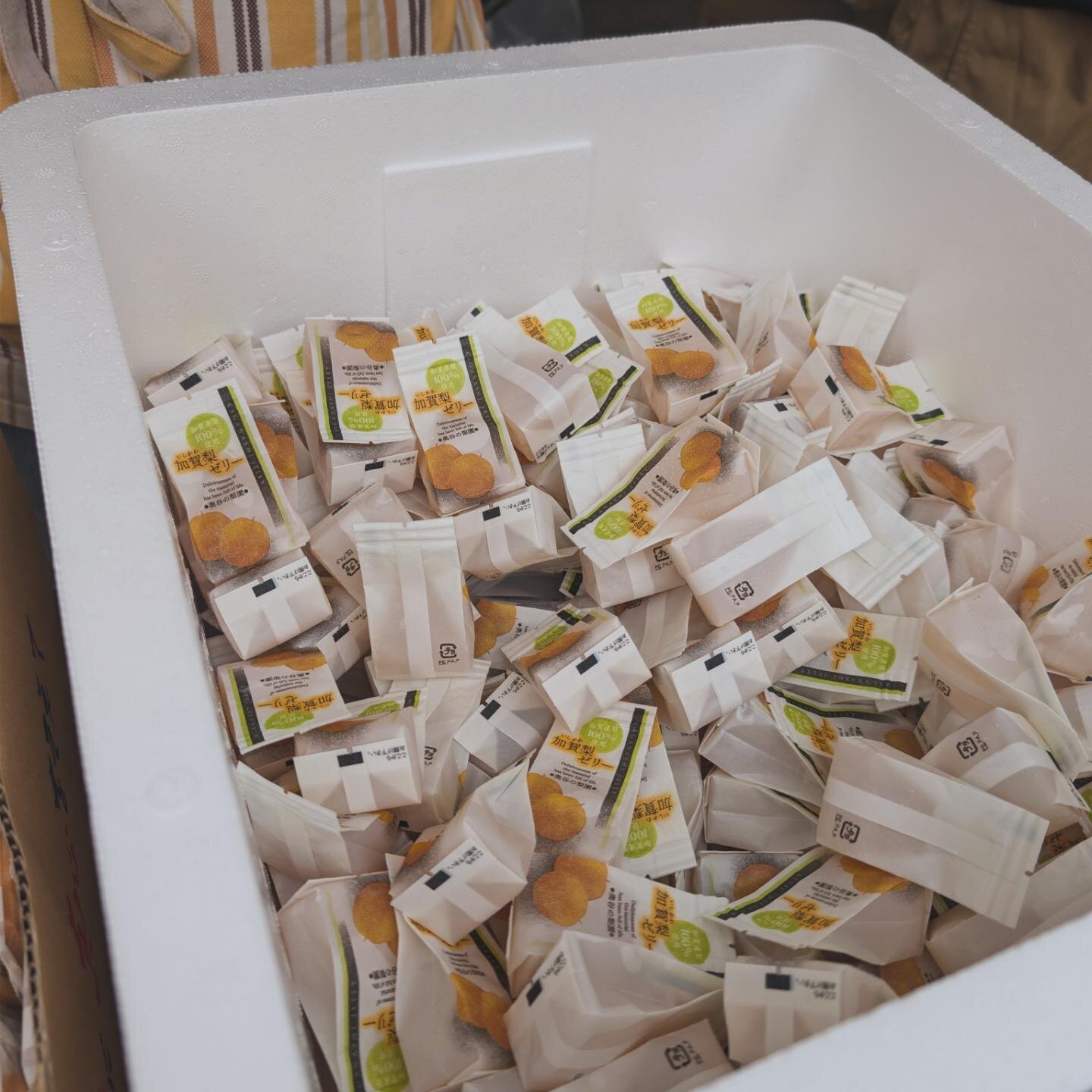
For food, there were ample onigiri, fruits such as watermelon, snacks like cookies and rice crackers, and local specialties. A personal favorite was the “Kaga Pear Jelly”—good enough that I bought some at a souvenir shop on my way home.
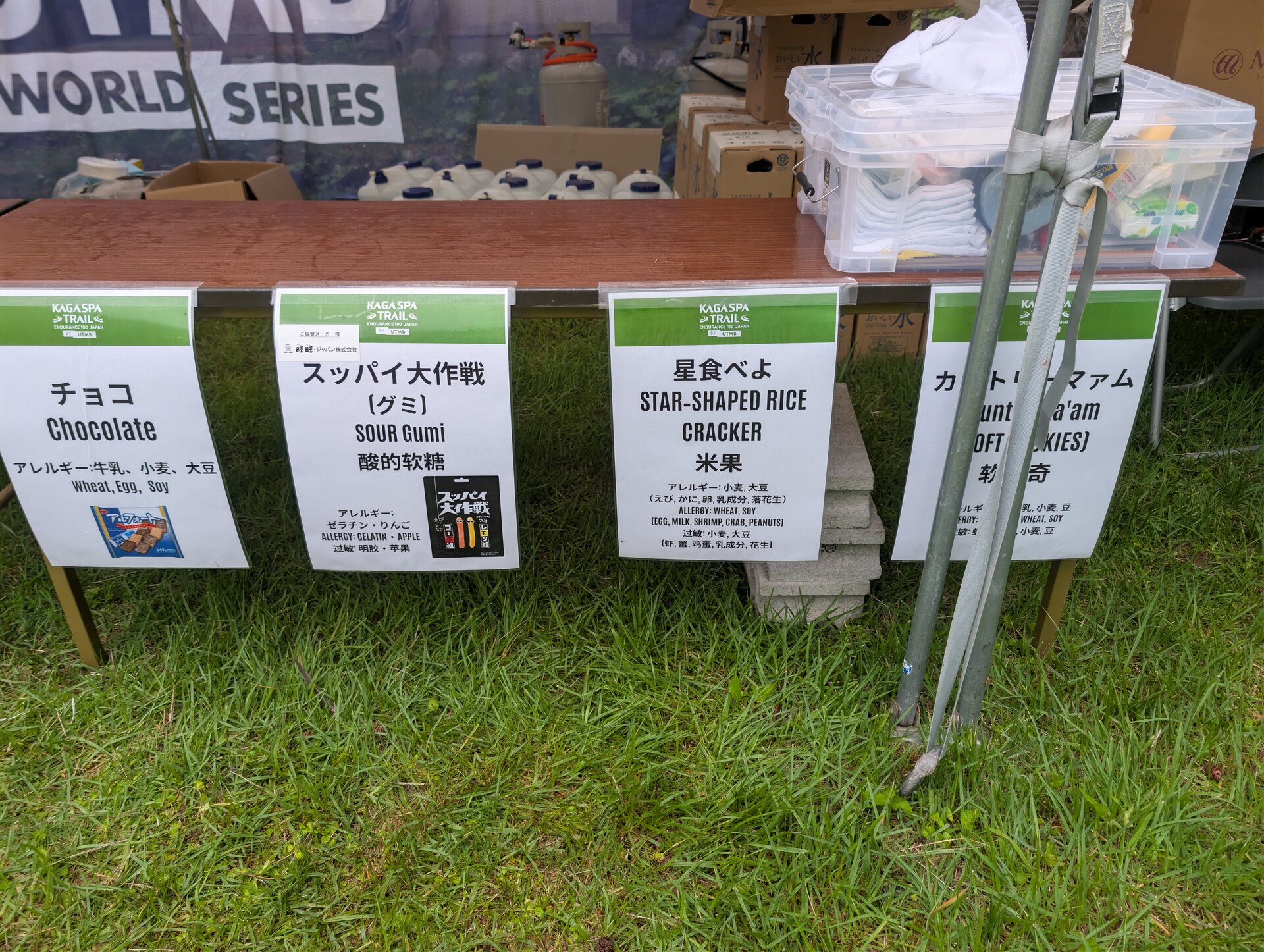
Equally noteworthy was the allergy labeling. For runners like me with a banana allergy, and for international participants who often cannot tell what ingredients are in unfamiliar food served in a foreign country, this attention to allergen information felt like a fusion of Japanese hospitality and safety consciousness.
Strategic Race Design: The Secret to Raising the Finish Rate from 39% to 75%
The 100K category finish rate, which hit an unusually low 39% in 2025, leaped to 75% at this year’s race. Of course, compared to last year’s 37°C heat, this year’s persistent rain helped lower temperatures—but even more than that, meticulous strategic updates made the difference.
- Start time change: To avoid peak heat, the 100K start was moved from morning to 18:30 in the evening—a strategy to make effective use of cooler nighttime hours.
- Course optimization: While extending the cutoff by one hour, one major climb was cut. Cumulative elevation was reduced by roughly 1,000m, redesigning the course to be more “runnable.”
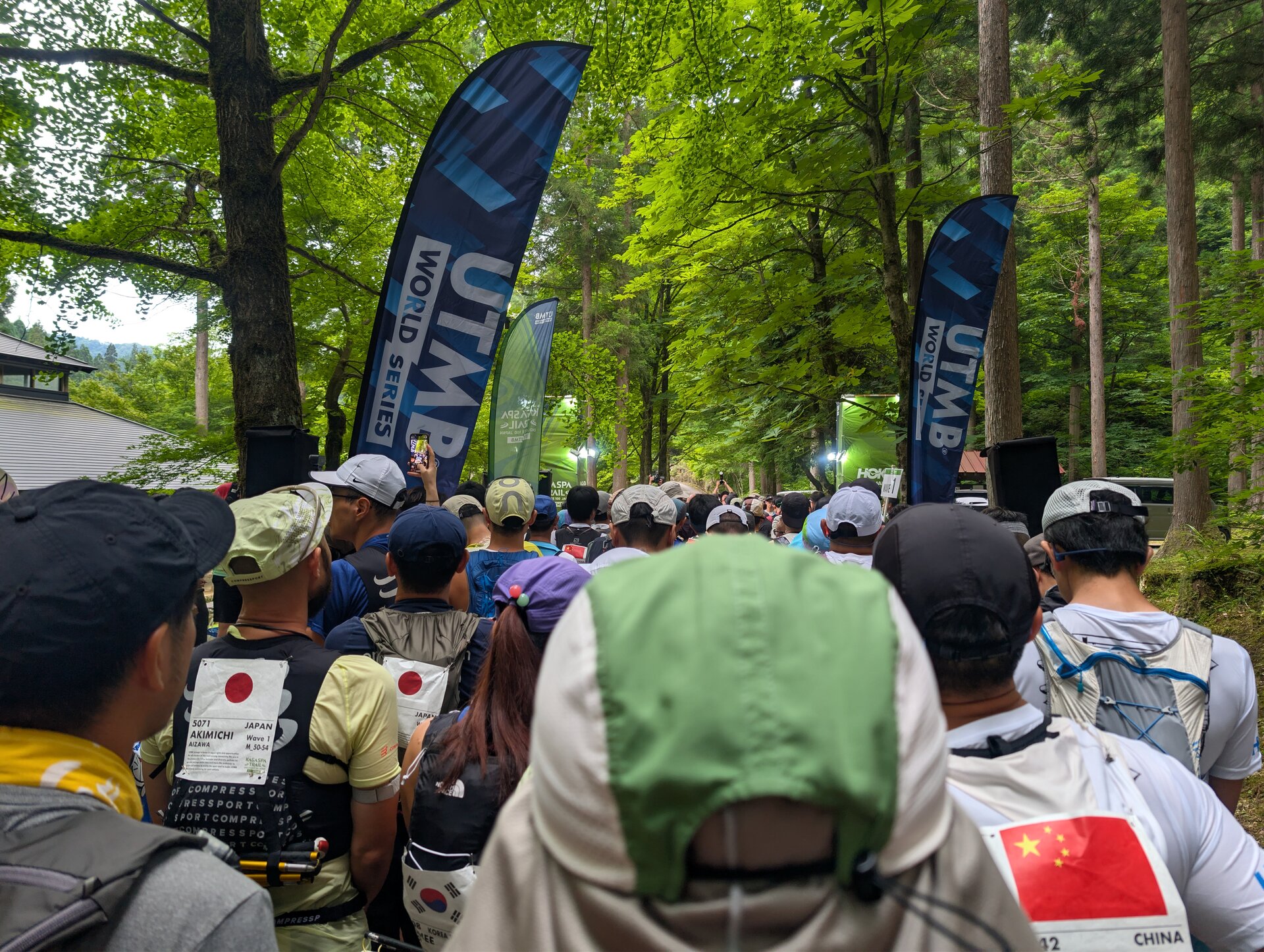
- A new start format: In the 20K category, a “split wave start” was introduced—deliberately narrowing the gate so runners departed two at a time. This eliminated congestion at the trail entrance, allowing runners to find their rhythm without stress.
The split wave start is something that some by UTMB races have begun to adopt, and this was reportedly the first attempt at a Japanese trail race. In the 20K, while runners are grouped into Elite, Wave 1, and Wave 2, the start is further subdivided within each wave to ease congestion at the trail entrance.
Cultural Resonance: The History of Yamanaka Onsen and the Beat of Japanese Drums
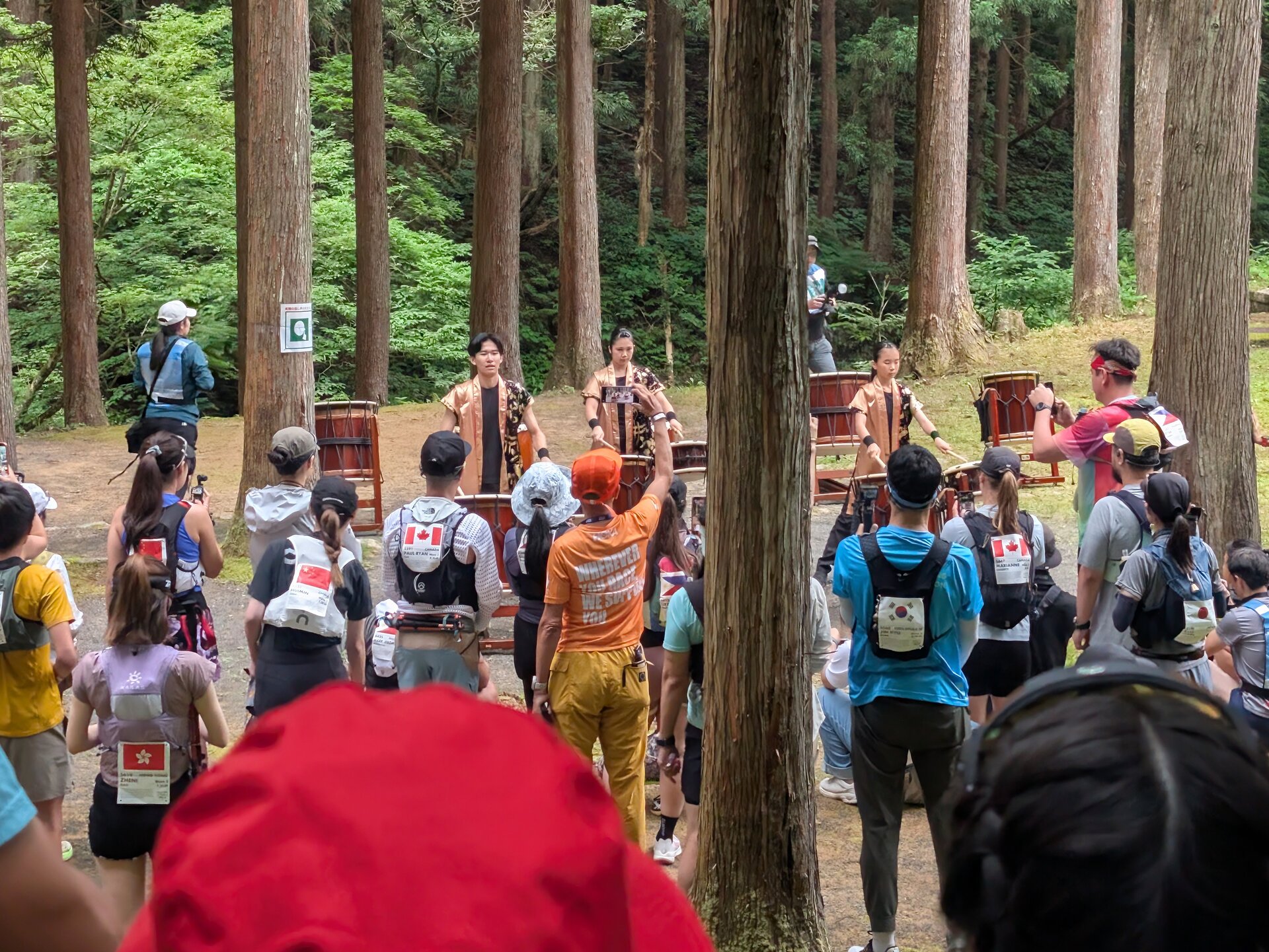
Yamanaka Onsen—one of Japan’s three most famous hot springs, with 1,300 years of history and beloved by the poet Matsuo Basho. The race elevated this cultural backdrop into an experience.
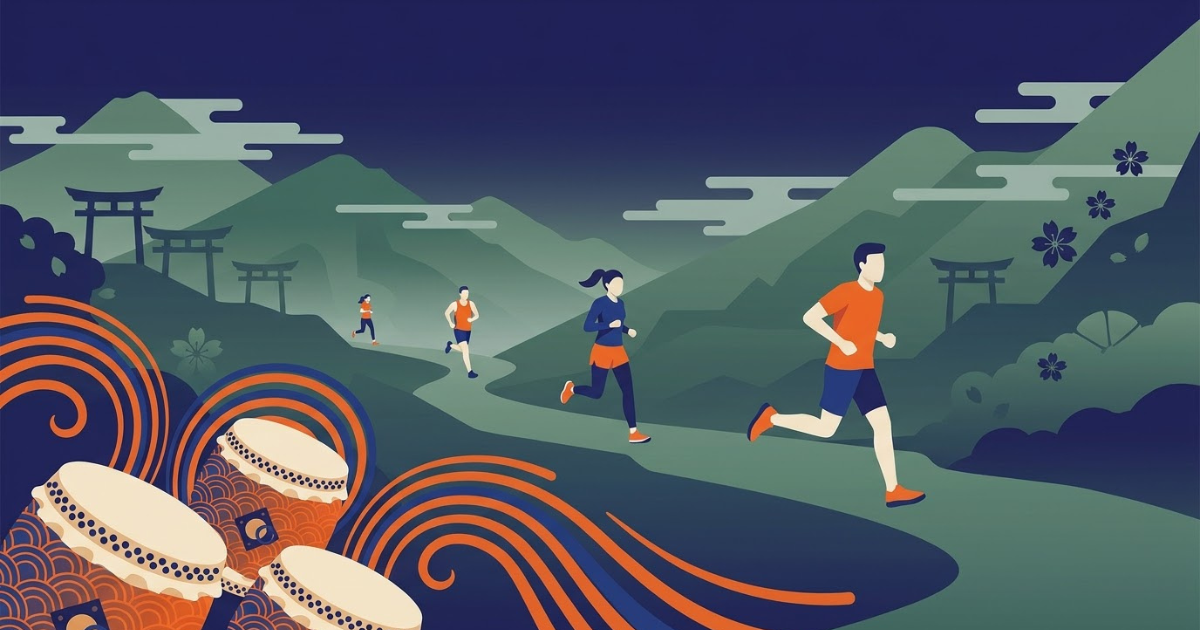
The performance of traditional Japanese drums by local elementary and middle school students at the start not only stirred the competitive spirit of runners but also created the “encounter with local culture” essential to an international race.
Just as Taiwan’s “Xtrail Kenting by UTMB” welcomes runners with indigenous dance, this is the “cultural resonance” that the UTMB World Series values. Yamanaka’s traditions likely left a deep impression on international runners as a mystical Japanese experience, and on Japanese runners as a moment of “reflecting on Japanese culture” and pride.
Japan’s Unique “After-Race” Experience: The Curious Harmony of Hot Springs and Convenience Stores
The crowning jewel of the UX (user experience) that Kaga Spa Trail offers lies in the finish area environment. At the heart of the venue stands the public bathhouse “Soyu (Kiku no Yu),” with a FamilyMart right next door.
Fresh from a muddy finish, you soak your fatigue away in a legendary hot spring with 1,300 years of history, then walk straight to the convenience store for a “egg sandwich” and “iced coffee” lunch. This scene—where the “extraordinary” (trail), the “everyday” (convenience store), and the “traditional” (hot spring) sit side by side—must appear as a uniquely Japanese charm to international runners. I am convinced this environment exists nowhere else in the world.
This curious harmony where the sacred and the mundane intersect was the defining scene of the Kaga race experience.
Conclusion: From Kaga to the World—and a Question for the Future
The 2026 Kaga Spa Trail Endurance 100 by UTMB felt like it had evolved into a “brand” the world can be proud of—not merely an extension of a domestic race—including its SNS strategy with professional photography and video. From race operations and aid station quality to course design, everything was dramatically better than last year—truly a global standard.
Last year’s “Kaga Spa Shock” may have been shock therapy for Japan’s trail running community. But thanks to that shock therapy, Japan’s international races were pushed toward a global standard, and I was reminded once again of the resilience of the Japanese people.
Of course, challenges remain on the path to even greater heights.
For example, the timing of the event. June is the off-season for tourism in the hot spring town due to local circumstances, but if runner safety is the top priority, shifting to a “May edition” to avoid the rainy season and extreme heat is worth discussing.
Also, regarding cultural friction around toilet etiquette, careful measures such as multilingual signage and cardboard disposable trash bins will be essential for further internationalization. What I encountered was used toilet paper scattered on the floor of a private stall—not flushed down the toilet.
This may seem surprising to Japanese people, but in Asia, only a handful of countries—including Japan—allow toilet paper to be flushed. This is not unique to this race; it is a common challenge for Japan’s trail running races as they become more international.
Yet the organizing team that achieved such a turnaround in just one year is more than enough to inspire confidence in this race’s future.
Are you ready to claim your next “running stone” at this beautiful sacred ground that overcame adversity and evolved?